Abu Dhabi
Guide: what to see, where to stay, when to go and what it costs
- Now
- +32°, clear data: MET Norway
- Best season
- November — March
- Time
- UTC+4
- Currency
- dirham, AED
- Airports
- AUH →
Abu Dhabi in a minute
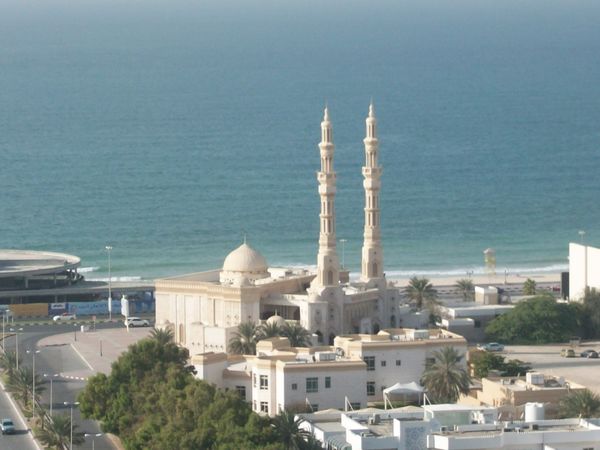
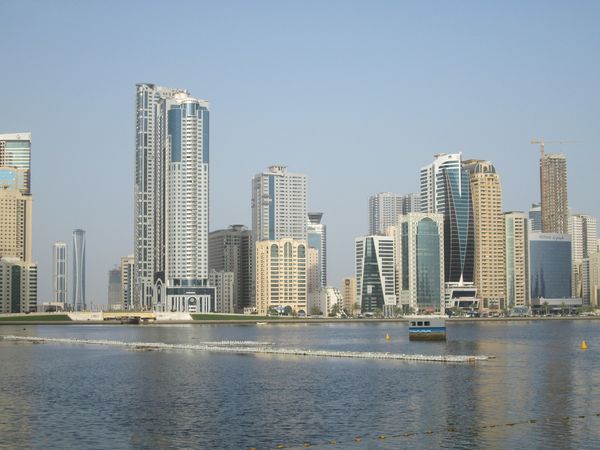
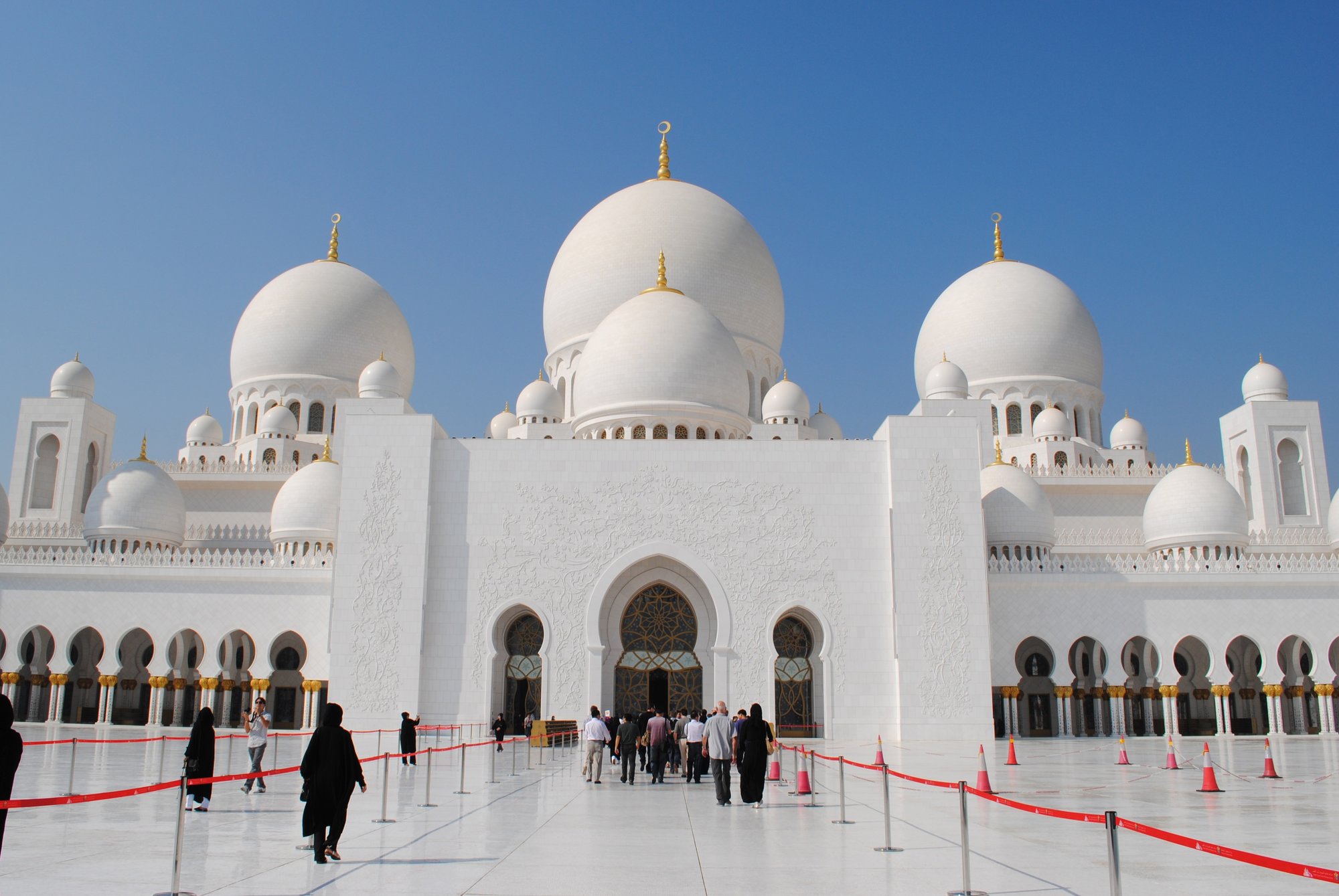
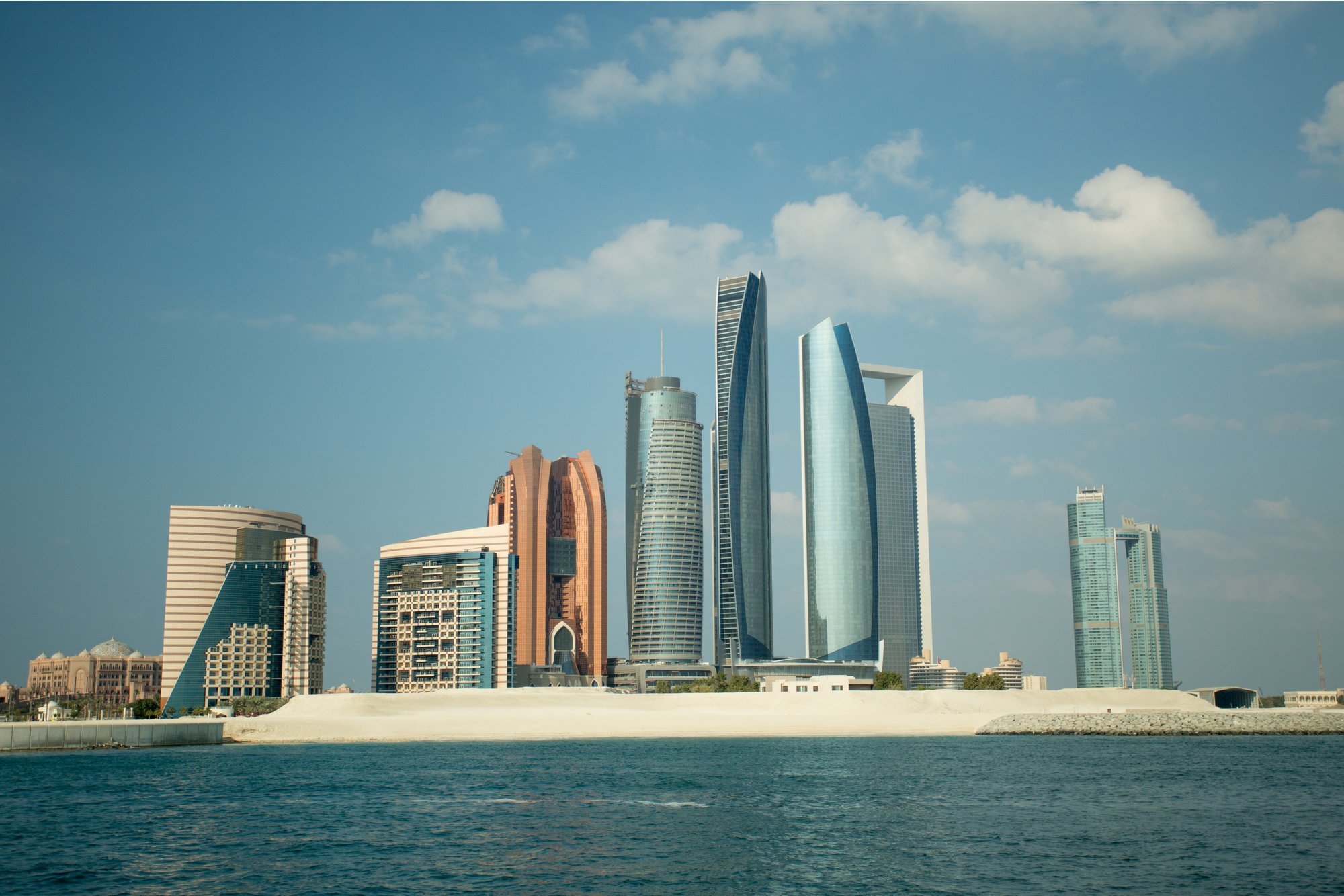
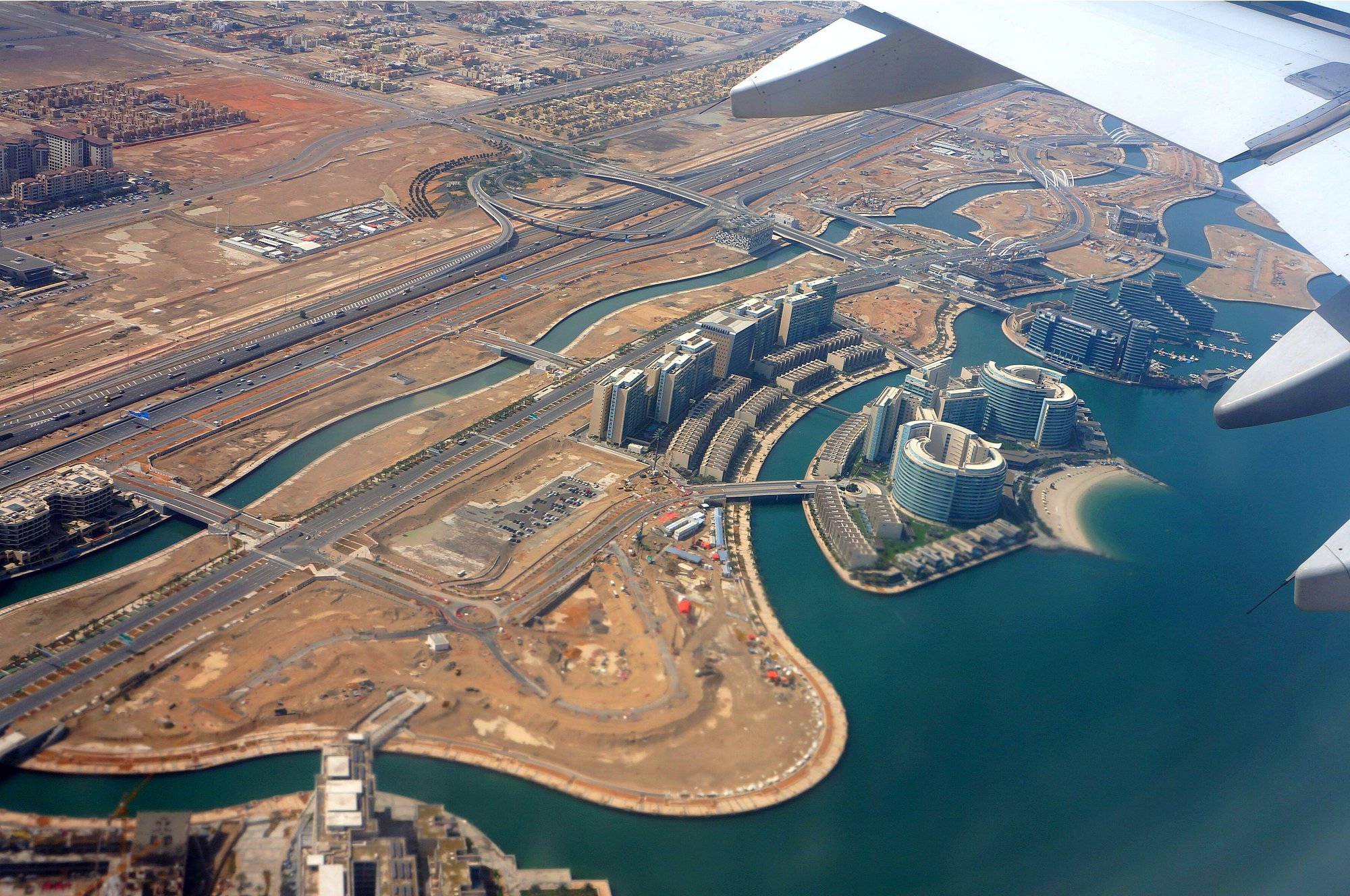
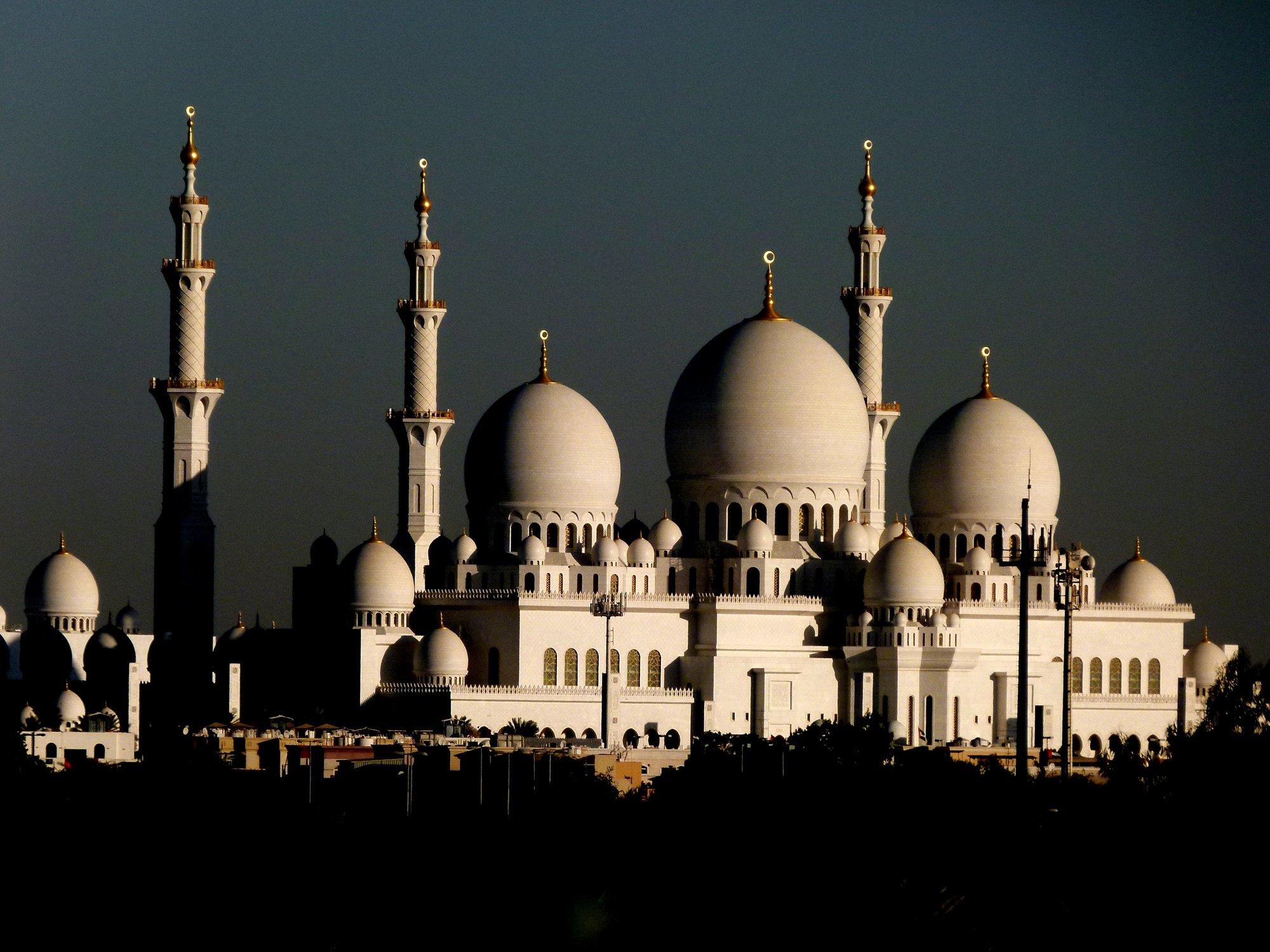
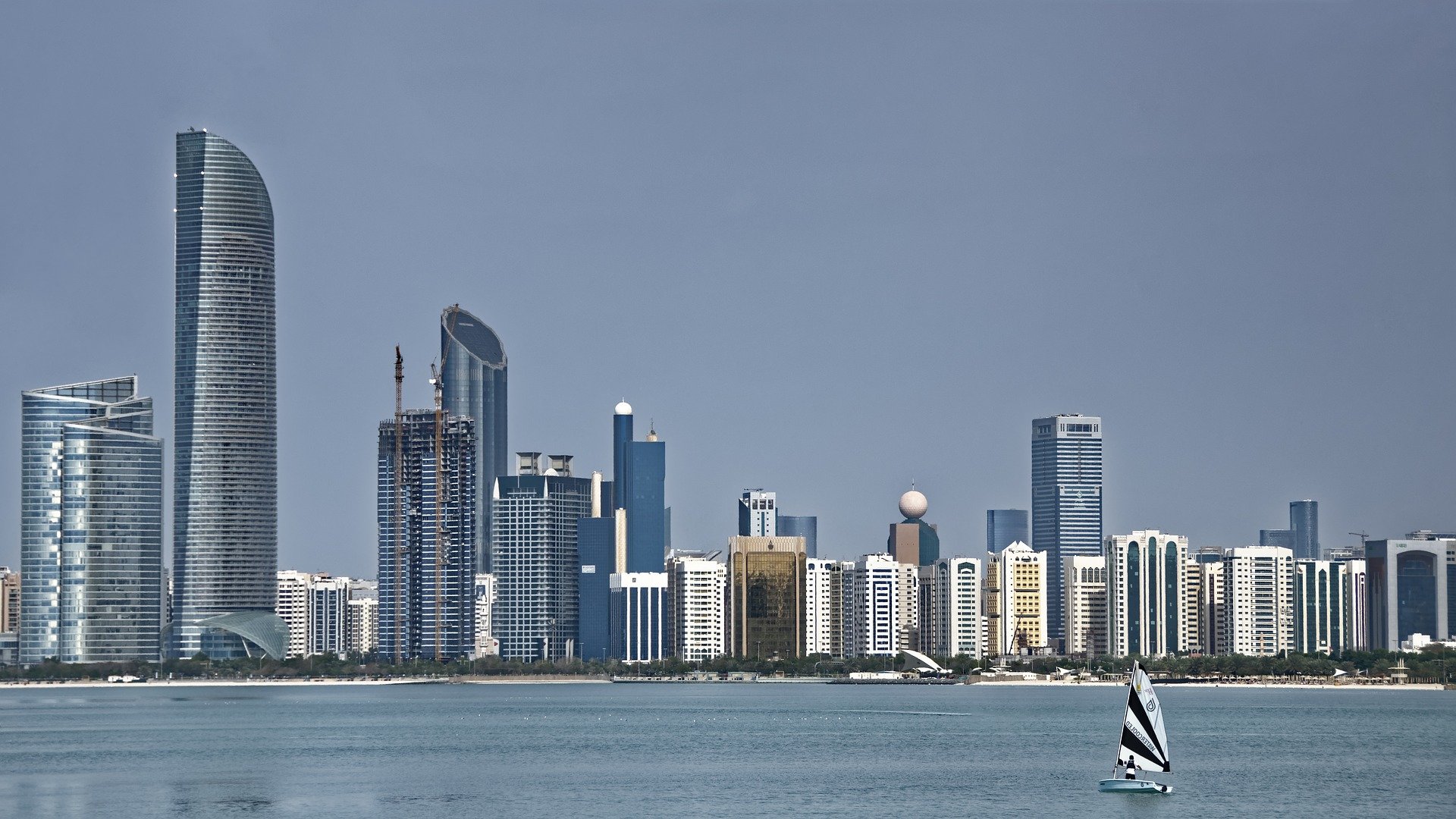
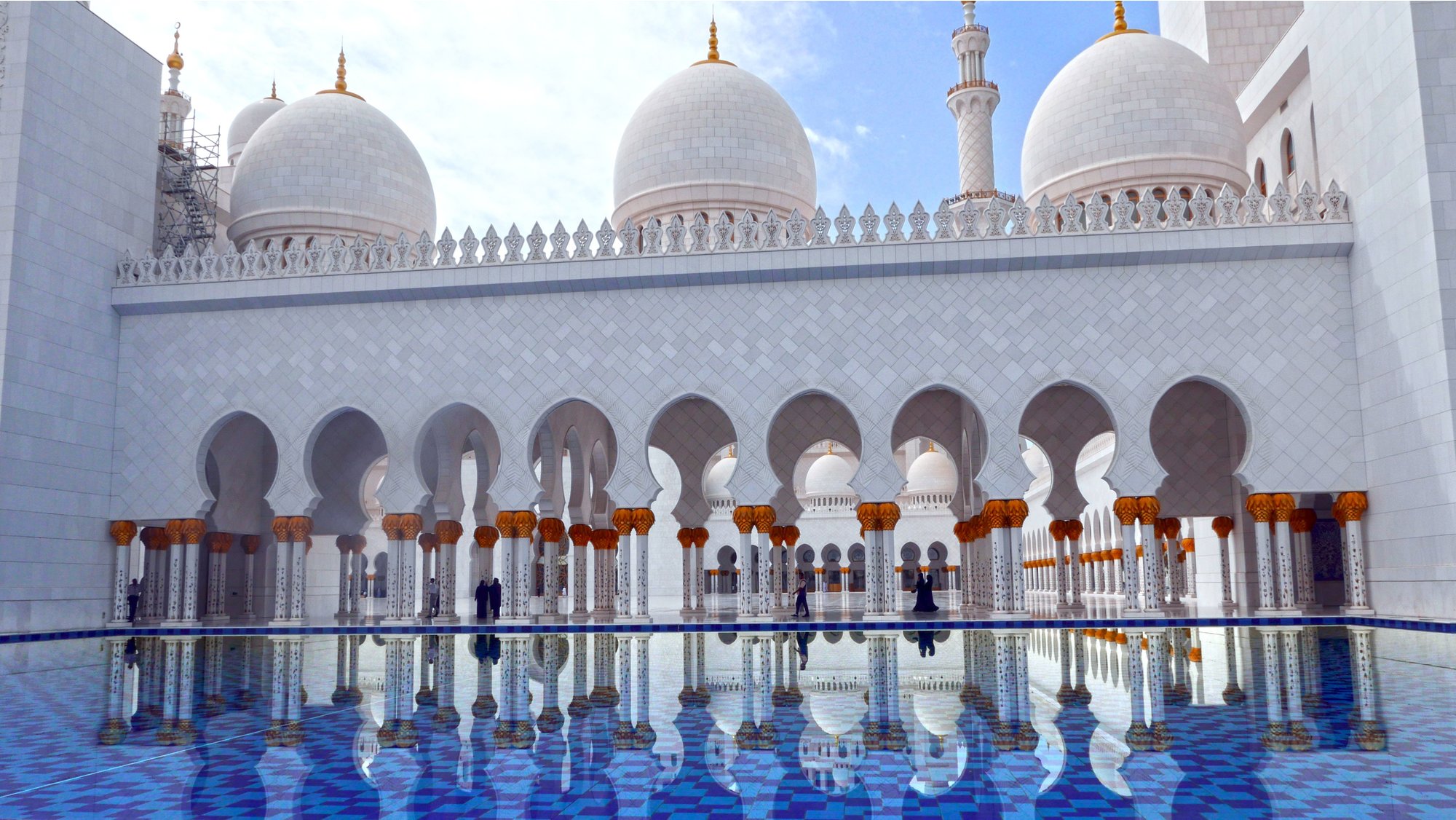
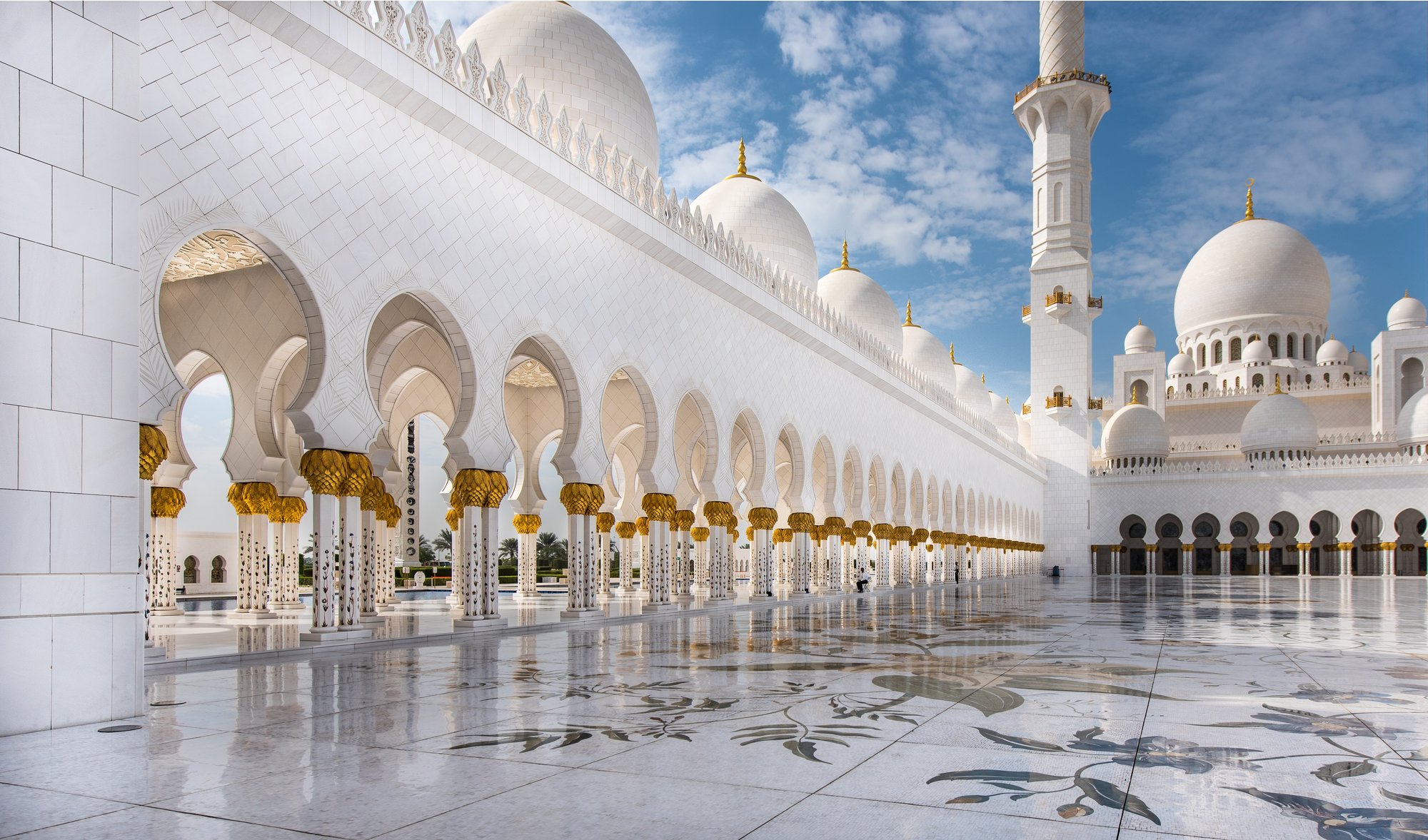
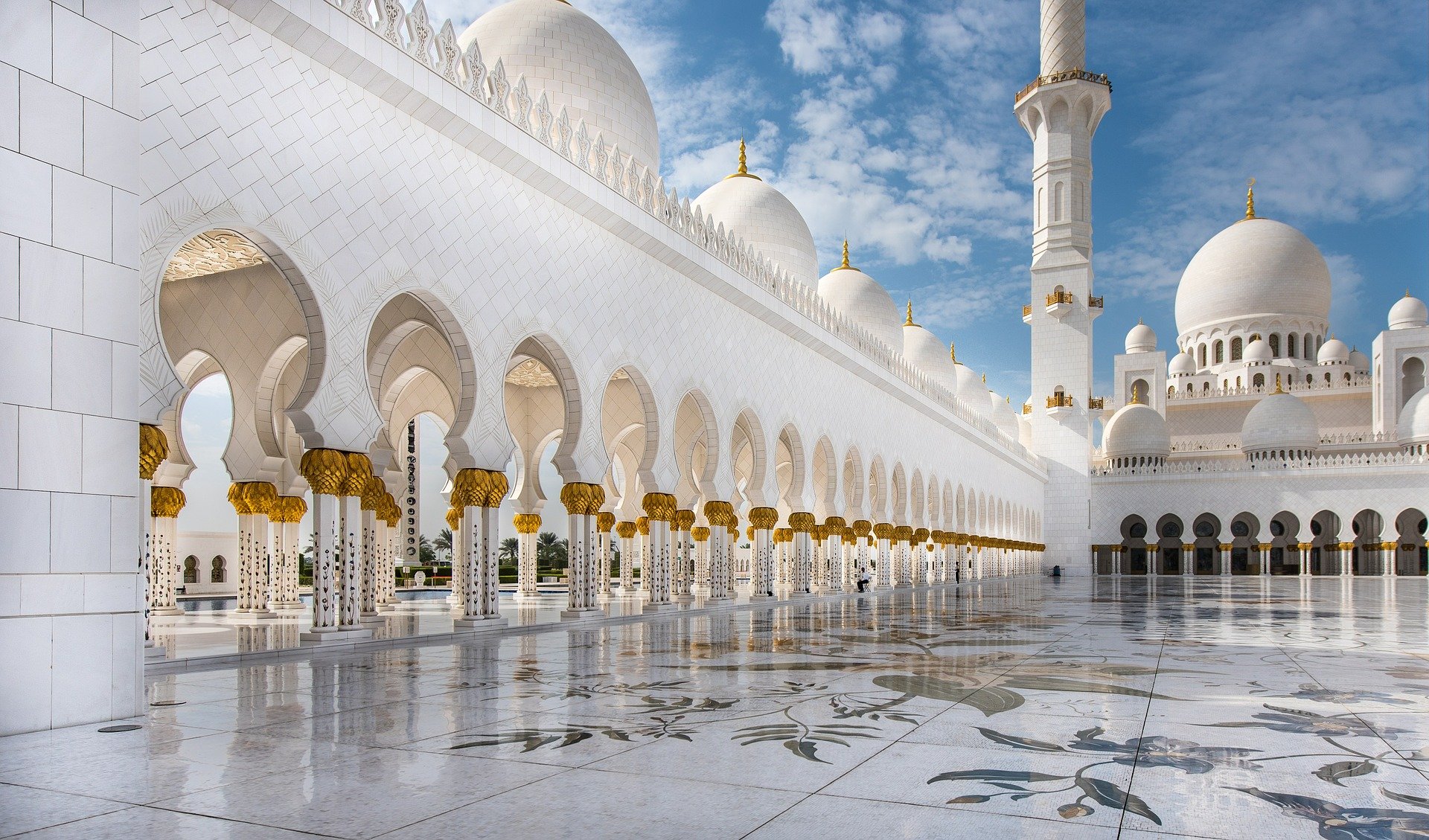
Abu Dhabi is the official capital of the UAE and the country's second-largest city after Dubai. The city sits on a T-shaped island in the Persian Gulf, linked to the mainland by several bridges, and feels noticeably calmer and more formal than neighbouring Dubai: it's home to the government, embassies and oil company headquarters, and alongside the skyscrapers you'll find spacious waterfront promenades, world-class museums and one of the largest mosques on the planet.
According to the emirate's census, Abu Dhabi's population exceeds 3.8 million, and, as in Dubai, the vast majority are foreign residents. The city gets fewer tourists than Dubai, but it has its own draws: the Saadiyat Island cultural district with Louvre Abu Dhabi, and the Formula 1 circuit on Yas Island, surrounded by theme parks open all year round.
Abu Dhabi's districts
Abu Dhabi City Centre — the business heart of the city around Qasr Al Hosn fort, where the emirate's history began; today it's a dense grid of skyscrapers and offices.
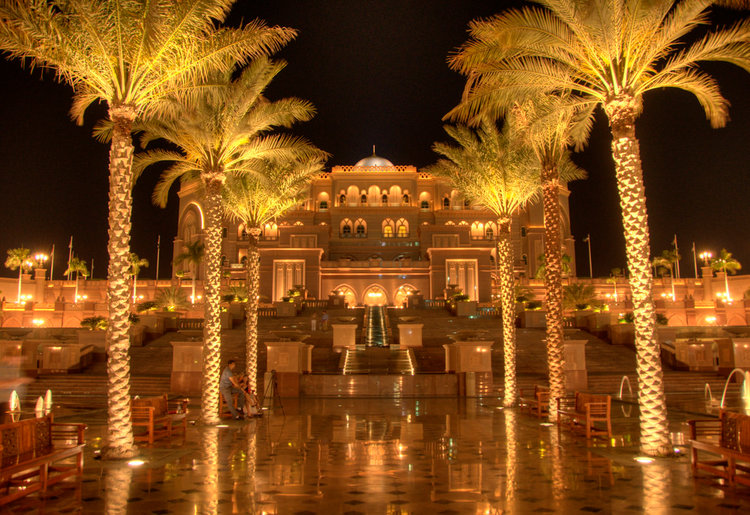
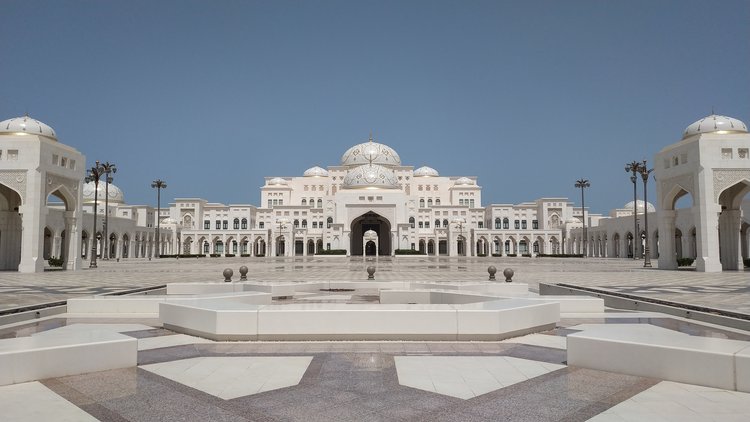
The Corniche — a waterfront promenade with city beaches, the Qasr Al Watan palace and the Emirates Palace hotel; the best spot for an evening walk and views over the bay.
Yas Island — the entertainment island: the Formula 1 circuit, Ferrari World, Warner Bros. World, Yas Waterworld water park and Yas Mall — easily worth a full day on its own.
Saadiyat Island — the cultural district: Louvre Abu Dhabi, the Zayed National Museum (under construction) and one of the city's best beaches.
Best time to visit
As elsewhere in the UAE, October to April is the most comfortable stretch — daytime temperatures of +25…+32°C and cool evenings. Peak season runs from December to February, when hotels are priciest and Yas Island's events calendar is busiest.
In summer, from June to September, daytime temperatures stay above +40°C with high humidity — being outdoors is only comfortable early morning or late evening. Museums, malls and theme parks run year-round, air-conditioned, and hotels are noticeably cheaper at this time.
How to get there
Abu Dhabi International (AUH) is the emirate's main airport, 30 km from the city centre, with direct flights from Europe, the CIS and Asia. Some low-cost and regional flights also land at Dubai's Al Maktoum International (DWC) — from there it's about another 1.5 hours by road to Abu Dhabi.
From AUH you can reach the centre by taxi or a pre-booked transfer — Abu Dhabi doesn't have a metro yet; visa requirements depend on your nationality — check the official ICP UAE website for the current rules before you travel.
Getting around the city
Abu Dhabi never built a metro, so getting around means taxis (yellow, metered) and the Careem and Uber apps. The Abu Dhabi Bus network covers the main districts but takes some familiarity with the routes. Yas Island and Saadiyat Island sit apart from the centre — a taxi or rental car is the easiest way there, especially if you're covering several places in a day.
Things to see in Abu Dhabi
All 36 places →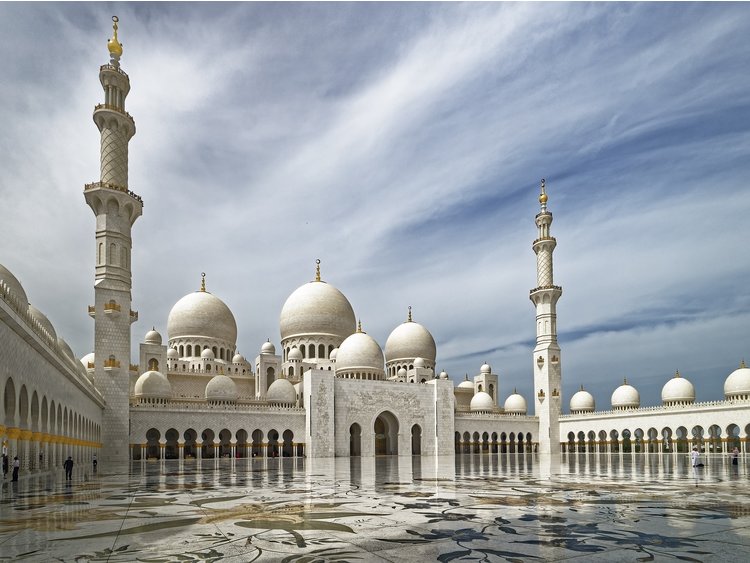

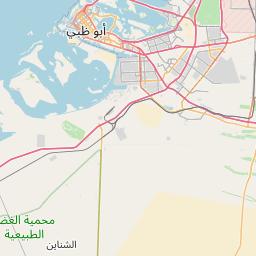
Abu Dhabi neighbourhoods
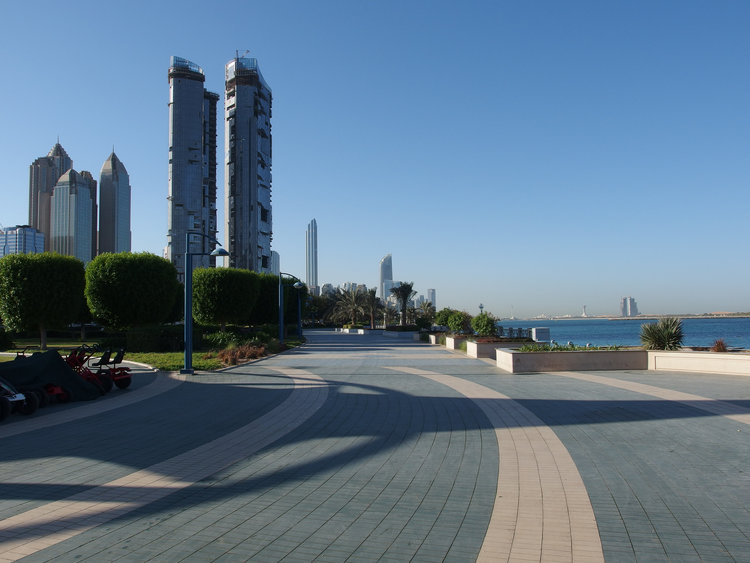 Corniche
The seafront of city beaches, Qasr Al Watan and Emirates Palace
11 places · 16 hotels
Corniche
The seafront of city beaches, Qasr Al Watan and Emirates Palace
11 places · 16 hotels
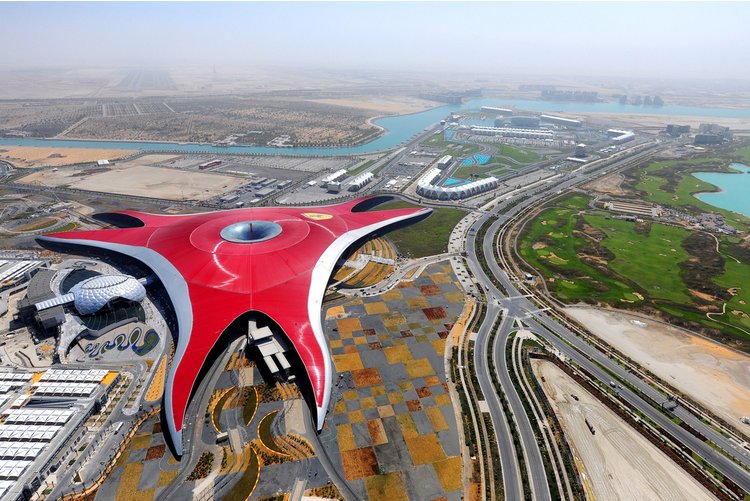 Yas Island
The entertainment island: Ferrari World, Warner Bros. World, Yas Waterworld and the F1 circuit
8 places · 11 hotels
Yas Island
The entertainment island: Ferrari World, Warner Bros. World, Yas Waterworld and the F1 circuit
8 places · 11 hotels
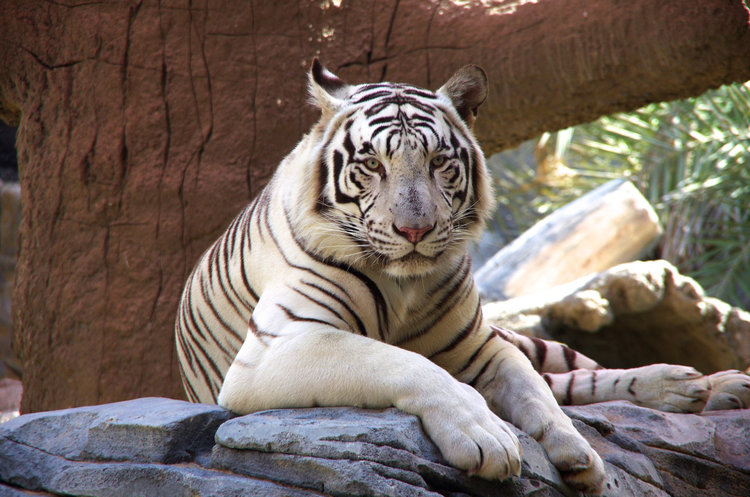 Around Abu Dhabi
Out of town: Al Wathba Wetland Reserve, the Falcon Hospital, Emirates Park Zoo, the car museum and Sir Bani Yas Island
5 places
Around Abu Dhabi
Out of town: Al Wathba Wetland Reserve, the Falcon Hospital, Emirates Park Zoo, the car museum and Sir Bani Yas Island
5 places
 Saadiyat Island
The island of culture and beaches: Louvre Abu Dhabi and Saadiyat Beach
4 places · 6 hotels
Saadiyat Island
The island of culture and beaches: Louvre Abu Dhabi and Saadiyat Beach
4 places · 6 hotels
When to go to Abu Dhabi: weather by month
- Jan 24° 17° comfortable
- Feb 25° 18° comfortable
- Mar 29° 21° comfortable
- Apr 32° 23° shoulder season
- May 36° 27° hot
- Jun 39° 30° hot
- Jul 40° 32° hot
- Aug 41° 33° hot
- Sep 38° 31° hot
- Oct 35° 27° shoulder season
- Nov 31° 24° comfortable
- Dec 26° 20° comfortable
Where to stay in Abu Dhabi
 Sheraton Abu Dhabi Hotel & Resort
from 456 AED · ≈ 124 $
Sheraton Abu Dhabi Hotel & Resort
from 456 AED · ≈ 124 $
 Radisson Blu Hotel & Resort, Abu Dhabi Corniche
from 525 AED · ≈ 143 $
Radisson Blu Hotel & Resort, Abu Dhabi Corniche
from 525 AED · ≈ 143 $
 The WB Abu Dhabi, Curio Collection By Hilton
from 1 626 AED · ≈ 443 $
The WB Abu Dhabi, Curio Collection By Hilton
from 1 626 AED · ≈ 443 $
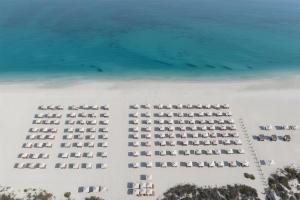 Park Hyatt Abu Dhabi Hotel and Villas
from 1 826 AED · ≈ 497 $
Park Hyatt Abu Dhabi Hotel and Villas
from 1 826 AED · ≈ 497 $
 The Ritz-Carlton Abu Dhabi, Grand Canal
from 949 AED · ≈ 258 $
The Ritz-Carlton Abu Dhabi, Grand Canal
from 949 AED · ≈ 258 $
 Al Raha Beach Resort & Spa
from 574 AED · ≈ 156 $
Al Raha Beach Resort & Spa
from 574 AED · ≈ 156 $
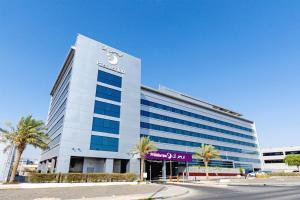 Premier Inn Abu Dhabi Airport Business Park
from 268 AED · ≈ 73 $
Premier Inn Abu Dhabi Airport Business Park
from 268 AED · ≈ 73 $
 Al Diar Sawa Hotel Apartments
from 318 AED · ≈ 87 $
Al Diar Sawa Hotel Apartments
from 318 AED · ≈ 87 $
Tours and activities in Abu Dhabi
Partner: ViatorAbu Dhabi airports
FAQ
When is the best time to visit Abu Dhabi?
October to April, +25…+32°C during the day. Peak season is December to February, when hotels cost more and Yas Island's events calendar is busiest. In summer, June to September, daytime temperatures exceed +40°C with high humidity.
Which airport should I fly into?
Zayed International (AUH), 30 km from the centre - the emirate's main airport. Some low-cost carriers fly into Dubai's Al Maktoum International (DWC), about another hour and a half from there to Abu Dhabi.